
From personal crisis to national change
How lived experience is shaping healthcare guidance
To mark Alcohol Awareness Week, NICE is sharing the story of James Halls, a lay committee member on NICE's alcohol-use disorders quality standard. James' lived experience of alcohol dependence has helped shape national guidance and improve care for thousands of people across the country.
When James was admitted to hospital with sepsis, medical staff initially missed the diagnosis. The reason was not a lack of clinical knowledge, but the stigma surrounding alcohol dependence. This stigma can cause blindspots in the system, allowing people to drop off care pathways, when they’re at their most vulnerable. James was seriously ill. His family were called in to say goodbye.
"My symptoms were misdiagnosed and it led to multiple organ failure. I was in a wheelchair. I had yellow skin."
James had come from a successful career in corporate banking and independent consultancy. He had not considered himself to be affected by alcohol. Yet here he was, fighting for his life, experiencing first-hand the gaps in a system that he would later work to transform.

James Halls, Open Source Healing Initiative founder and NICE committee member
James Halls, Open Source Healing Initiative founder and NICE committee member
The revolving door
What James encountered during his recovery was a system struggling to support people like him. Repeated hospital admissions for alcohol detoxes, each followed by discharge without adequate support. A referral to see a specialist a month later, but by the time the appointment arrived, he was back in hospital.
"It's a waste of resources, money, time, effort. But most importantly, it's a waste of life. People die in that revolving door. And I'm blessed that I didn't."
He saw how clinical interventions, whilst medically effective, failed to address the psychological and community support people needed. Someone who might have spent decades using alcohol to cope with trauma, would receive a 4 or 5 day detox, then be discharged without the wraparound care essential for lasting recovery.
Turning experience into action
Rather than letting these experiences define him negatively, James channelled them into action. He founded OSHI, the Open Source Healing Initiative, a Hull-based charity that empowers people with lived experience to help others facing similar challenges. The name carries deliberate meaning: in Japanese, 'oshi' means 'friend that supports'.
Research conducted by James and his team revealed the scale of the challenge: an estimated 10% of all NHS patients are alcohol dependent, with nearly 40% of paramedic and ambulance time spent on alcohol-related incidents. Traditional pathways, they found, were producing low success rates at significant cost.
OSHI's model responds directly to this. It connects people in crisis with recovery coaches who provide immediate, same-day support; guides them through mutual aid and holistic activities; and then encourages those in recovery to give back to the community themselves. "We believe that transformed people, transform people," the charity states.
Through this work - supporting hundreds of people directly, and thousands more indirectly - James began hearing the same systemic failures repeated again and again. Not just from those struggling with addiction, but from their families too. It became clear that while OSHI could change individual lives, the wider system needed to change as well.
Bringing lived experience to national guidance
A medical doctor who witnessed James' advocacy suggested he apply to NICE. James knew of NICE but did not fully understand how it worked. He submitted what he describes as "the most obscenely detailed, quite aggressive in places" application. A 10,000-word document sharing his observations of systemic failures and opportunities for change.
"I was shocked when I was invited for an interview. NICE people were surprisingly very, very welcoming, very open to receive these quite serious observations."
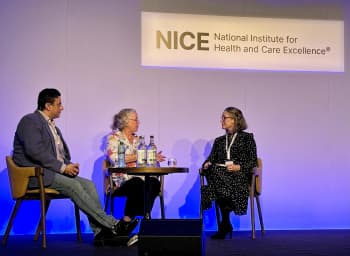
James joined the update committee for alcohol-use disorders, sitting alongside professors and consultant clinicians with decades of experience. He found his contributions valued equally.
"I wasn't there as a box-ticking exercise. I was there and I was really, really welcome to be there."
There were disagreements, robust debates about quality standards where experienced clinicians held different views from James. But the process was fair. Some decisions were appropriately clinical; others were ones where the chair chose to defer to the perspective of someone with lived experience.
Change measured in lives
The impact has been tangible. Quality standards were changed as a direct result of James sharing his experiences. In Hull and East Yorkshire, those national changes to guidance have meant more patients are now referred to community organisations like OSHI, people who might otherwise have been lost in the very revolving door system James experienced himself.
"I started seeing people that would have otherwise got lost actually getting the help they need when they need it. I feel genuine gratitude and relief that my painful experiences are helping others."
James has continued to contribute to NICE's work, playing an active role in the people and communities network, contributing to conferences, and responding to specific questions as they arise. He notes, "it doesn't go a few months without me doing something with NICE."
He describes his work as turning painful experience into something meaningful.
"Decisions made that are influenced by lay member contributions can reverberate through time and space and echo throughout eternity. Real experiences given of their own lives can literally change society for the better.
"I can see the parts where I contributed. I have my couple of bullet points on the guidance that I know I was really keen on. And they're life-changing bullet points.
"But, it isn’t just a couple of bullet points on a page, it’s mothers whose sons get to come home, it’s husbands whose wives might survive and be able to be there for their children growing up. It’s paid for in life force."
Find out more
- Read our quality standard on alcohol-use disorders: diagnosis and management.
- If you have lived experience of a health condition and want to help shape the care that others receive, visit the NICE website for details about becoming a committee member.
- Subscribe to NICE newsletters and alerts for the latest health and care guidance, clinical updates and evidence-based resources.
 Built with Shorthand